
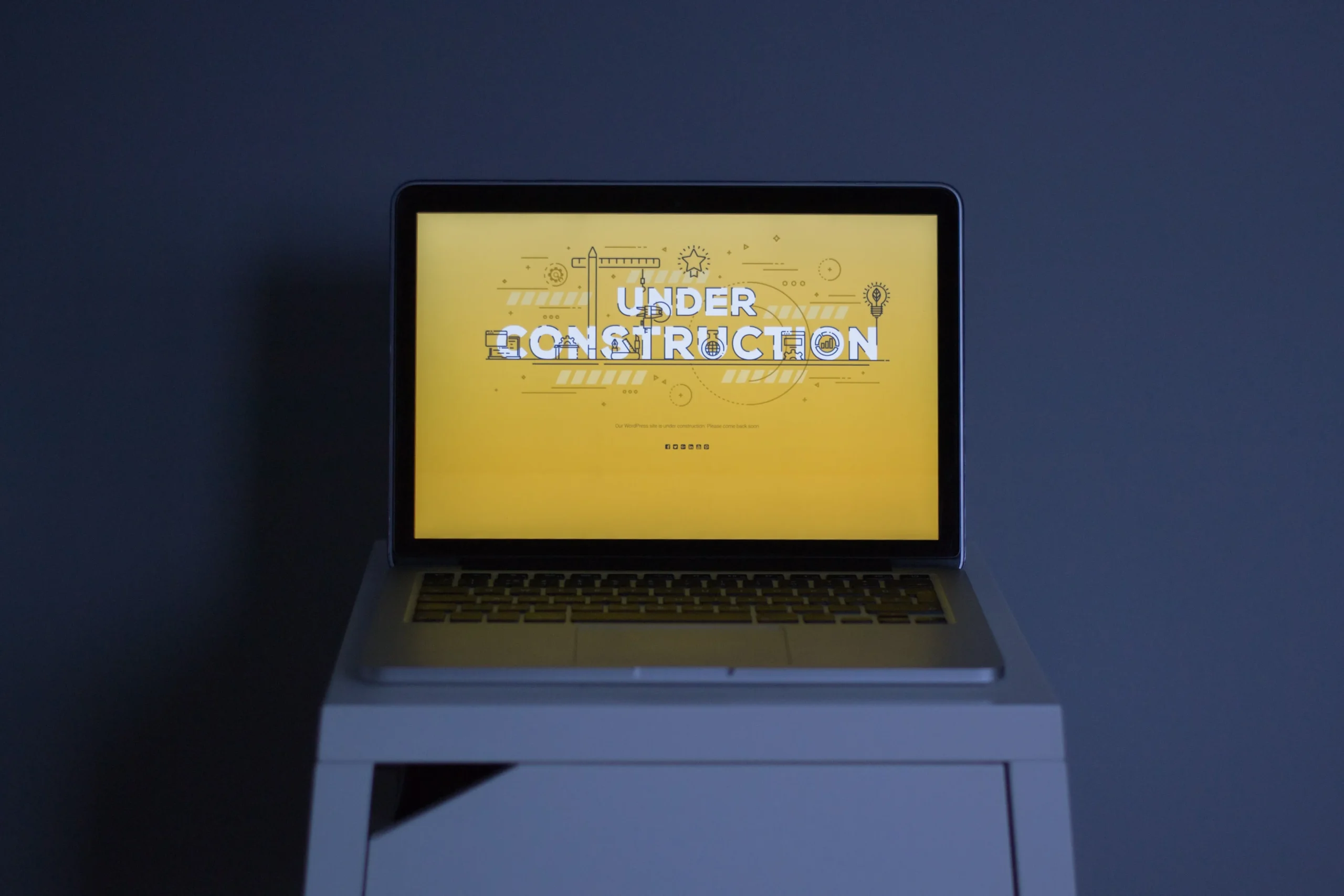
Under Construction Pages & Staging Websites
Maintaining a live site while implementing changes & updates and is like changing the tyre on a moving car, you want to keep things moving whilst you make the change, with no disruption to your website visitors. So it’s a delicate balance between keeping the site functional for users and making the necessary enhancements behind the scenes. Enter the “Under Construction Page” and its counterpart, the staging website – these are two crucial tools in the arsenal of web developers striving for impeccable user experiences.
Understanding the Need for an “Under Construction” Page
Introducing new features, revamping layouts or performing maintenance tasks can temporarily disrupt the user experience. An “Under Construction” page serves as a transparent acknowledgment of ongoing work, setting the right expectations for visitors and minimising confusion or frustration. It signals that while changes are underway, you’re actively maintaining and improving the site for the benefit of users.
Keeping Your Users Engaged
An intelligently crafted “Under Construction” page can include relevant information such as anticipated completion dates, alternative contact methods or sneak peeks of upcoming features. All great for keeping your users informed & engaged during the transition phase. It also stops a user becoming frustrated when they head to their favourite page, only to find it has broken functionalities or is missing.
The Role of Staging Websites
Staging websites replicate the live environment, allowing developers to test changes, carry out updates and add new features in a controlled setting before deploying to the live site. This enables thorough testing without risking disruption to your user experience.
Collaborative Development
Staging websites facilitate collaborative development by providing a shared platform for developers, designers and website owners to review and provide feedback on proposed changes. This streamlined workflow ensures that all parties are aligned before changes are pushed live.
Making changes directly to a live site carries inherent risks, including potential downtime, data loss or unintended consequences. Staging websites serve as a buffer, allowing developers to identify and address issues before they impact the live site. Importantly, they integrate with version control systems, enabling website developers to track changes, revert to previous versions if necessary and maintain a clear audit trail of modifications. This enhances accountability and facilitates efficient troubleshooting in case of unexpected issues.
Choosing the Right Approach
While both “Under Construction” pages and staging websites play vital roles in live site development, the best approach depends on various factors such as:
- scope of changes
- project timeline
- resource availability
In many cases, a combination of both may offer the most comprehensive solution, with “Under Construction” pages managing user expectations and staging websites facilitating seamless development and testing processes.
The “Under Construction” page and staging websites are both essential components of a robust live site development strategy. Using these tools effectively, means that website developers can navigate the complexities of site maintenance and evolution while prioritising your users experience & minimise any disruptions. Ultimately, the goal is to create a dynamic online presence that evolves alongside your users needs & technological advancements – these tools are invaluable allies in achieving that objective.

By Bec Lee
Bright Website Design
Bec is the founder of Bright Website Design, a Wilmslow-based website design agency specialising in building beautiful, high-performing WordPress websites for small & medium businesses.
With a reputation for being straightforward, technically sharp, and genuinely invested in her clients’ success, Bec has built websites for businesses of all shapes and sizes, from local Cheshire traders to companies operating across Europe.


